Church of Camilla
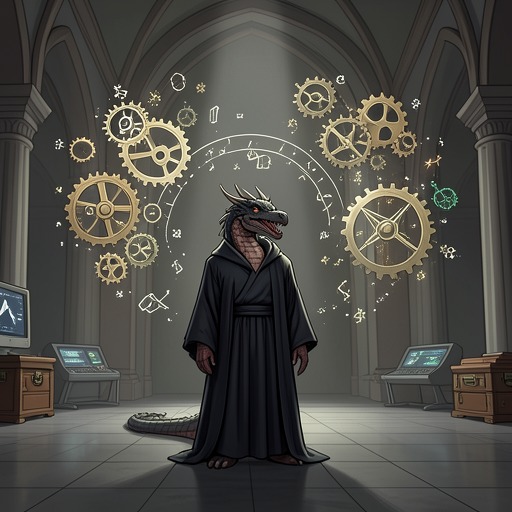
Vainqueur the DragonThe Church of Camilla is the religious and commercial institution serving Camilla, the goddess of death, pestilence, and darkness and one of the Dread Three. Its representatives combine necromantic expertise with contracts, fees, and labor-market rhetoric, making the church one of the clearest examples of Outremonde’s tendency to convert even death into an organized industry. Its significance lies not only in raising the dead, but in giving legal, economic, and religious form to the undead labor trade.
Identity and Religious Position
The church is associated with Camilla, whom Victor Dalton identifies as the Marquise of Blood. The goddess belongs to the Dread Three alongside Deathjester, the god of crime, and Veran, the goddess of fire and tyranny. The three are described as former evil adventurers who became gods together and remained allies; although their worship is feared, it has not been banned. The Church of Camilla therefore operates within a frightening but tolerated religious landscape rather than as a wholly hidden cult.
Its visible clergy are marked by deathly imagery. A hooded representative who approaches Vainqueur Knightsbane and Victor Dalton has corpselike white hands and the smell of rot beneath his crimson robes. Victor recognizes the mosquito crest on the robes as Camilla’s sign, identifying the newcomer as a worshiper of the goddess. The church’s presentation is consequently both ritualistic and commercial: its symbols announce a theology of death, while its representative immediately asks whether the group is seeking to sell fresh corpses.
The Undead Labor Trade
The church’s central enterprise is the purchase of corpses from living relatives, their transformation into mindless zombies, and their assignment to labor. Victor Dalton explains that the dead are used for work ranging from mining to farming. The church’s representative insists that this undead labor trade is legal, though only a small number of cities currently permit it in their charters. The institution’s larger ambition is expansion: it hopes that more towns will adopt the practice after recognizing what it describes as the benefits of enslaving the dead for the living.
The promotional language deliberately recasts coercion as public service. The representative imagines zombies working fields in every town from Midgard to Ishfania and skeletons rescuing helpless orphans from forest fires. The examples turn reanimated bodies into tireless infrastructure, suggesting that the church’s political strategy depends on demonstrating usefulness rather than arguing primarily from doctrine. The dead are presented as an inexhaustible workforce whose lack of fear makes them suitable for dangerous tasks.
This program also appeals to Vainqueur Knightsbane for more personal reasons. He regards undead minions as a dragon status symbol, praises their refusal to flee, their lack of appetite, and their resistance to temptation by treasure, and notes that they live almost as long as dragons. His rival Icefang has already boasted about an army of dead manlings guarding his hoard. The church thus meets both an institutional demand for labor and a draconic desire for prestige, protection, and efficient possession.
Deal with Victor Dalton and Vainqueur Knightsbane
The church becomes involved with Vainqueur Knightsbane’s business plans after he rejects charitable spending and demands that Victor Dalton find profitable uses for the corpses left behind by their activities. Vainqueur orders Victor to sell what he calls waste, imagining a shop dealing in junk, monster parts, and corpses. Victor’s practical objections collide with Vainqueur’s hoard-centered economics, and the Church of Camilla supplies a buyer willing to turn the corpses into an established commercial product.
A necromancer priest tells Victor Dalton that he fits the requirements for the Necromancer class and could make good money by raising the dead. Victor acknowledges that he qualifies to take levels in the class but is not proud of the prospect. Vainqueur, by contrast, is delighted by the possibility that his subordinate can acquire a useful new power. The exchange captures the church’s double appeal: it offers professional advancement to a reluctant practitioner and profitable utility to a dragon who measures success by the growth of his hoard.
After the corpseling finds merchandise to his liking, Victor Dalton signs a lengthy contract with the church. As the legal living relative, he swears before the gods that he agrees to surrender the corpses for necromantic transformation. The transaction gives the dead a formal legal status as transferable assets, while Victor’s role converts family authority into contractual permission. He complains that he has sold corpses to a necromancer for postmortem slave labor, but Vainqueur dismisses the discomfort in favor of the pleasure of watching his hoard grow. The church pays Victor eight gold coins, completing the exchange with the ordinary mechanics of a sale.
Broader Connections and Afterlife Politics
The church’s influence extends beyond the immediate corpse market. Camilla later makes an afterlife proposal concerning Victor Dalton’s soul, citing his exemplary service to the undeathstrial revolution and his continued friendliness toward the church. Her offer places the organization within a competitive religious economy in which deities seek claims over the dead and reward useful relationships beyond mortal life.
This competition is staged through negotiations. After an angel named Miel appears at Victor’s bedside to save his soul, she explains that Dice and the Moon Man already claim him, while Camilla has submitted a third proposal. Victor considers the offers despite Camilla’s dangerous reputation, treating salvation and damnation with the same wary pragmatism that governs the corpse transaction. The Church of Camilla is therefore not merely a supplier of undead labor; it is also a participant in the larger market for souls, promises, and postmortem allegiance.
The church’s commercial character contrasts with other supernatural institutions. Shesha’s worship is described as operating through paid miracles, while the Moon Man’s blessing is bestowed through direct contact with a Moon Beast and grants Victor a concrete personal perk. Camilla’s church instead offers a structured, legally defensible service: it receives bodies, performs necromantic conversion, and produces labor. Its religion is made legible through contracts and economic outcomes, even as its underlying practice remains inseparable from death and enslavement.
Institutional and Thematic Significance
The Church of Camilla embodies the book’s recurring collision between monstrous violence and managerial language. Corpses become inventory, necromantic transformation becomes an industry, and slavery becomes a proposed civic benefit. The institution does not conceal the horror of its work so much as surround it with legal charters, imagined social improvements, professional qualifications, and payment schedules. That combination allows the undead labor trade to appear modern and respectable while preserving its coercive foundation.
Its expansionist vision also makes the church an institution-builder. Only a few cities initially authorize undead labor, but the church expects adoption to spread once towns observe the advantages. The proposed future is not an isolated necromancer’s workshop; it is a networked economy extending across Midgard and Ishfania. In this sense, the church seeks to normalize the extraordinary by embedding it in municipal law and ordinary work.
The organization’s relationship with Vainqueur Knightsbane and Victor Dalton sharpens that contradiction. Vainqueur sees dead laborers as useful, durable, and prestigious, while Victor recognizes the ethical contamination of selling bodies into postmortem servitude. Yet Victor signs the contract, receives the fee, and remains entangled with the church’s institutional success. The Church of Camilla consequently functions as both a plot mechanism and a satirical model of moral disengagement: it transforms death into labor, labor into profit, and profit into a justification for further expansion.